

In 1962, an 80-year-old pope did something nobody expected.
He called 2,500 bishops from every continent on earth to Rome and essentially said, "We need to talk."
Pope John XXIII did not announce a doctrinal revolution. He did not promise to overturn centuries of Church teaching. He simply asked the Church to look in the mirror and ask a dangerous question:
How do we speak to a world that has stopped listening?
The word he used became the defining concept of Vatican II. Aggiornamento. Italian for "bringing up to date." This was not about changing what the Church believes. It was about changing how the Church speaks, acts, and engages a world transformed by two world wars, nuclear weapons, and rapid social change.
By the time you finish reading this article, you will understand what Vatican II actually did, what it did not do, and why it still matters for every Christian alive today.
You will see why traditional Catholics have concerns. You will understand why progressive Catholics have hope. And you will know why reasonable people can read the exact same documents and reach different conclusions.
Why Vatican II Happened: The World the Church Was Facing
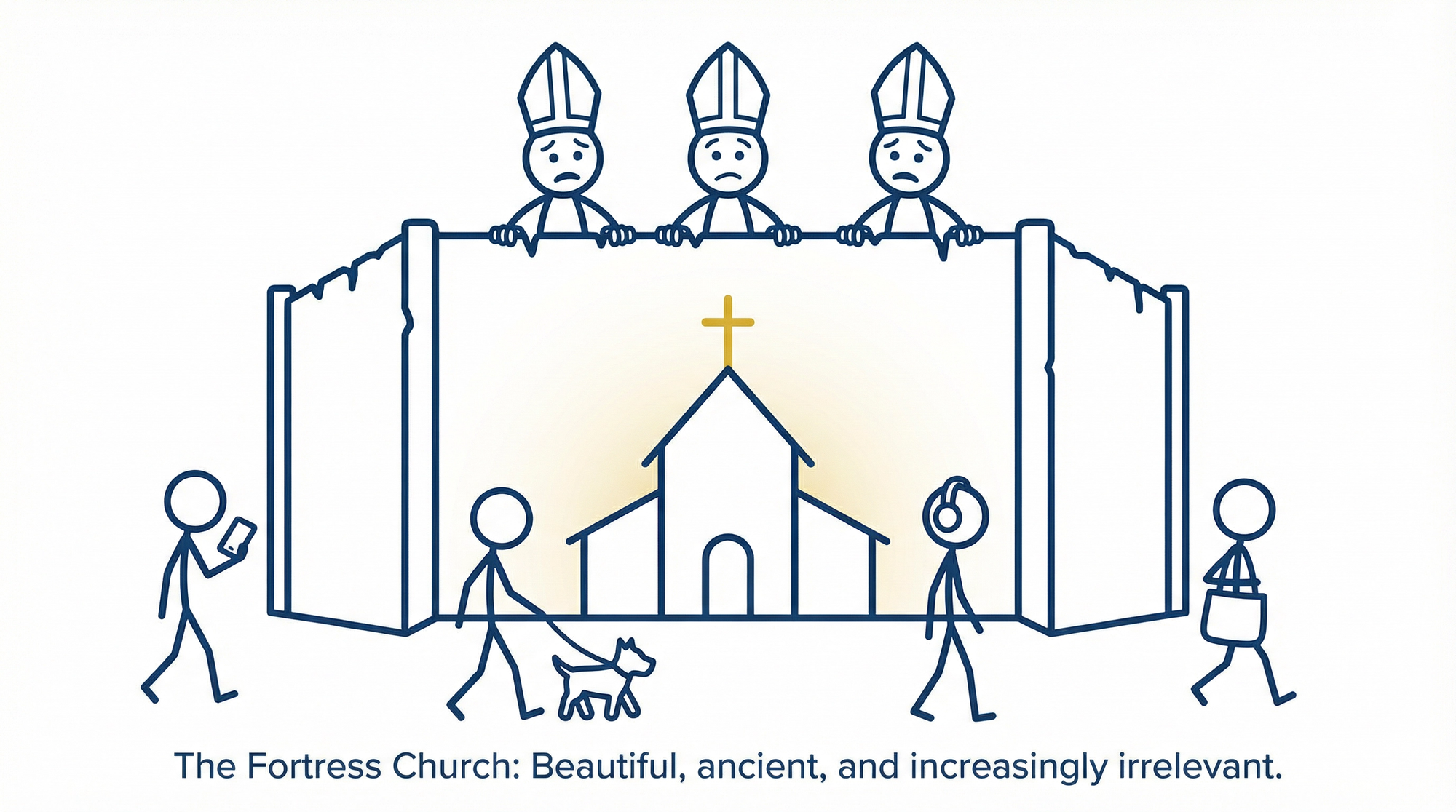
The Fortress Church
Before 1962, the Church presented an inward-facing posture. It gazed primarily upon itself, motivated by equal parts fear and self-interest, turning decisively away from the modern world.
The Mass was entirely in Latin. Laity were passive spectators sitting in pews while the priest stood with his back turned to the congregation, saying "his" Mass in a language most people did not understand. The Church was understood in primarily hierarchical and juridical terms. Bishops and priests were "the Church." Laypeople were subjects of it.
Pope Pius IX's Syllabus of Errors (1864) had condemned religious freedom and the equality of religions as heretical ideas. Ecumenism was basically nonexistent. Other Christians were in error. Other religions were threats.
The World Outside the Fortress
Two world wars had shattered European civilization. The Holocaust forced every Christian to reckon with centuries of anti-Jewish teaching and theological antisemitism that had prepared the ground for genocide.
Nuclear weapons made annihilation a daily possibility. Colonialism was collapsing. The Church needed to speak to newly independent nations in Africa and Asia, not just to a Christian Europe that was rapidly secularizing.
Young people were leaving. The secular world was advancing in science, democracy, and human rights while the Church appeared frozen in the 19th century. The world was changing at a pace the Church had never seen.
The Pope Nobody Expected
Angelo Giuseppe Roncalli was elected Pope John XXIII in 1958 at age 76. Most people expected a "caretaker pope," a safe interim choice before someone else took the office permanently.
Less than three months later, on January 25, 1959, he announced his intention to call an ecumenical council. The Roman Curia was stunned. Many cardinals opposed the idea. They saw no need for a council.
John XXIII's response was essentially this: "The world has changed. If we don't find a way to speak to it, we'll be preaching to empty pews."
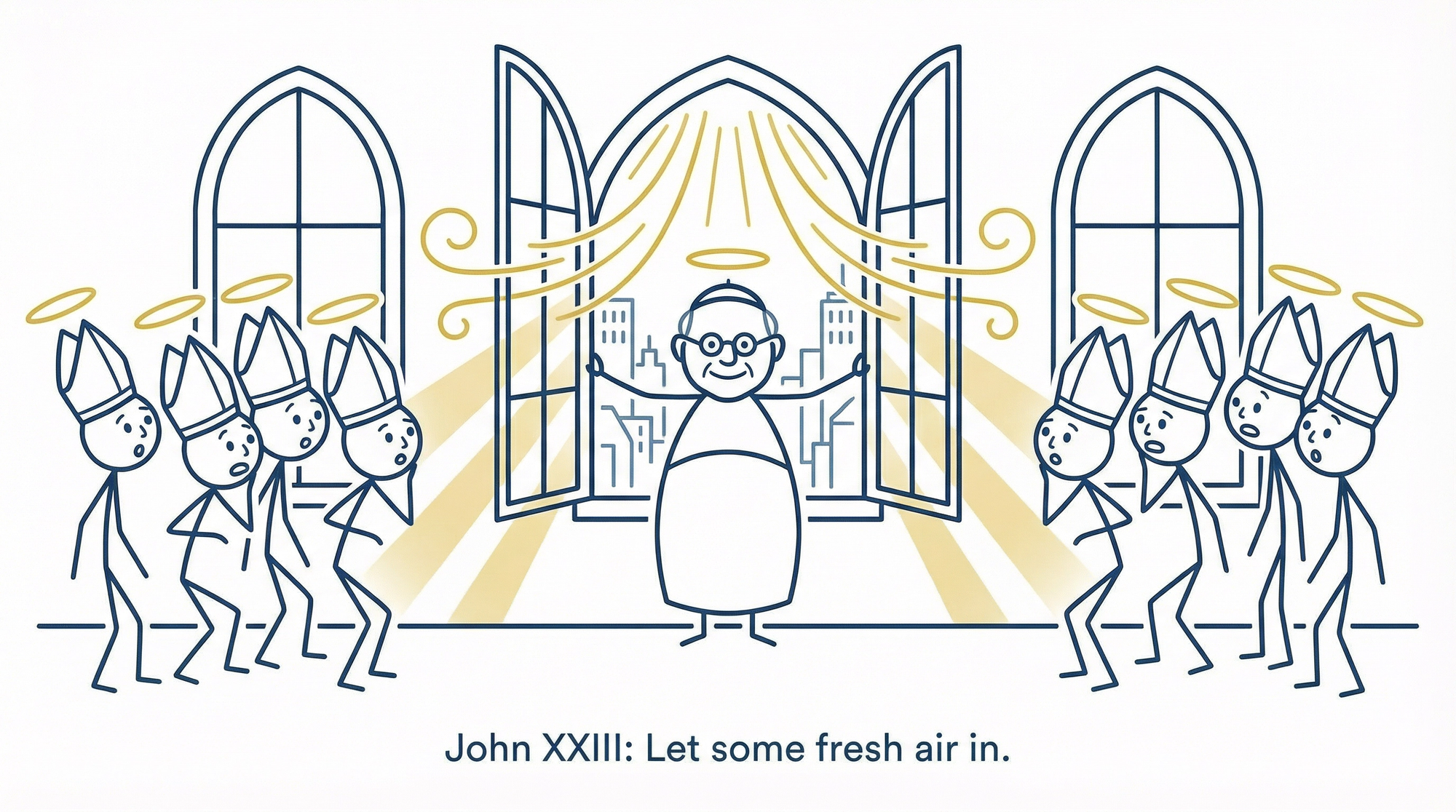
His opening address on October 11, 1962, set the tone. He rejected the "prophets of doom" who saw nothing but catastrophe in the modern world. Instead, he called for the Church to apply "the medicine of mercy rather than the weapons of severity."
His famous metaphor captured the moment: he wanted to "throw open the windows of the Church and let fresh air in."
The Council: How It Actually Worked
The Numbers
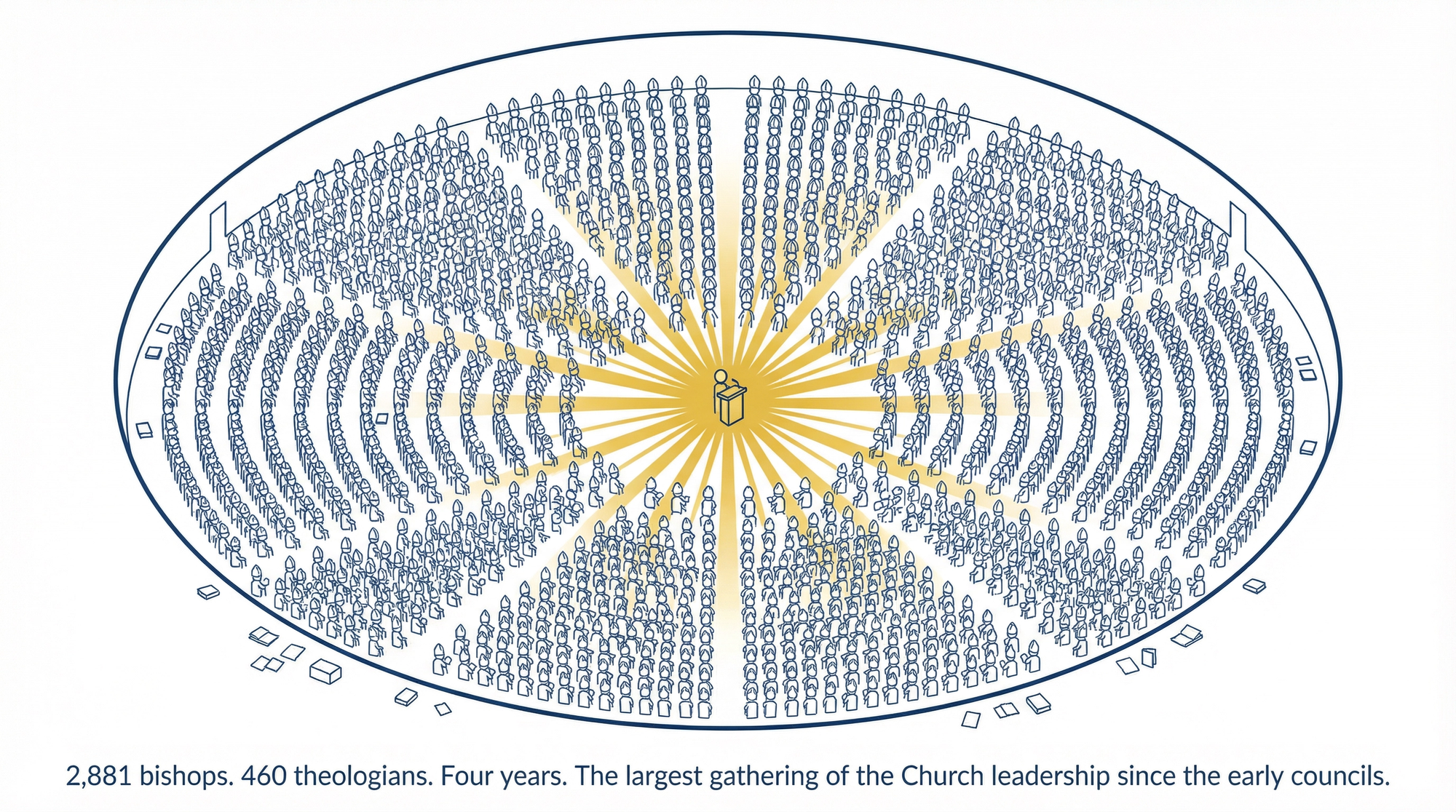
The Second Vatican Council spanned four sessions, each in the autumn: 1962, 1963, 1964, and 1965.
Roughly 2,500 bishops participated in each session (2,881 total across all four years). 460 theological experts called periti assisted the bishops. For the first time in Church history, women were allowed to attend a council as observers, a symbolic shift in itself.
The bishops held 169 General Congregations over four years. They produced 16 documents: 4 constitutions (the heaviest authority), 9 decrees (practical directives), and 3 declarations (statements of position).
Two Popes
John XXIII opened the Council and presided over Session 1 (October-December 1962). He died on June 3, 1963, between sessions. The world mourned.
Pope Paul VI was elected June 21, 1963, and led Sessions 2, 3, and 4. Paul VI was more cautious than John XXIII. He worried about going too far. But he honored his predecessor's vision and guided the Council to completion.
The Key Theologians
These were not just bishops voting. Behind the scenes, the most brilliant Catholic theologians of the 20th century were drafting and debating the documents.
Yves Congar was perhaps the most influential. He had been silenced under Pius XII for his forward-thinking ideas. Vatican II vindicated him completely.
Karl Rahner, a Jesuit, contributed his theology that grace is offered universally to humans. This opened the door to a new understanding of non-Christian religions.
Joseph Ratzinger, a young theologian who would later become Pope Benedict XVI, worked on multiple constitutions including Dei Verbum and Lumen Gentium. He began as a progressive voice and later became the leading advocate for conservative interpretation of the Council.
Henri de Lubac was also silenced under Pius XII. His expertise in theology and Church history proved invaluable.
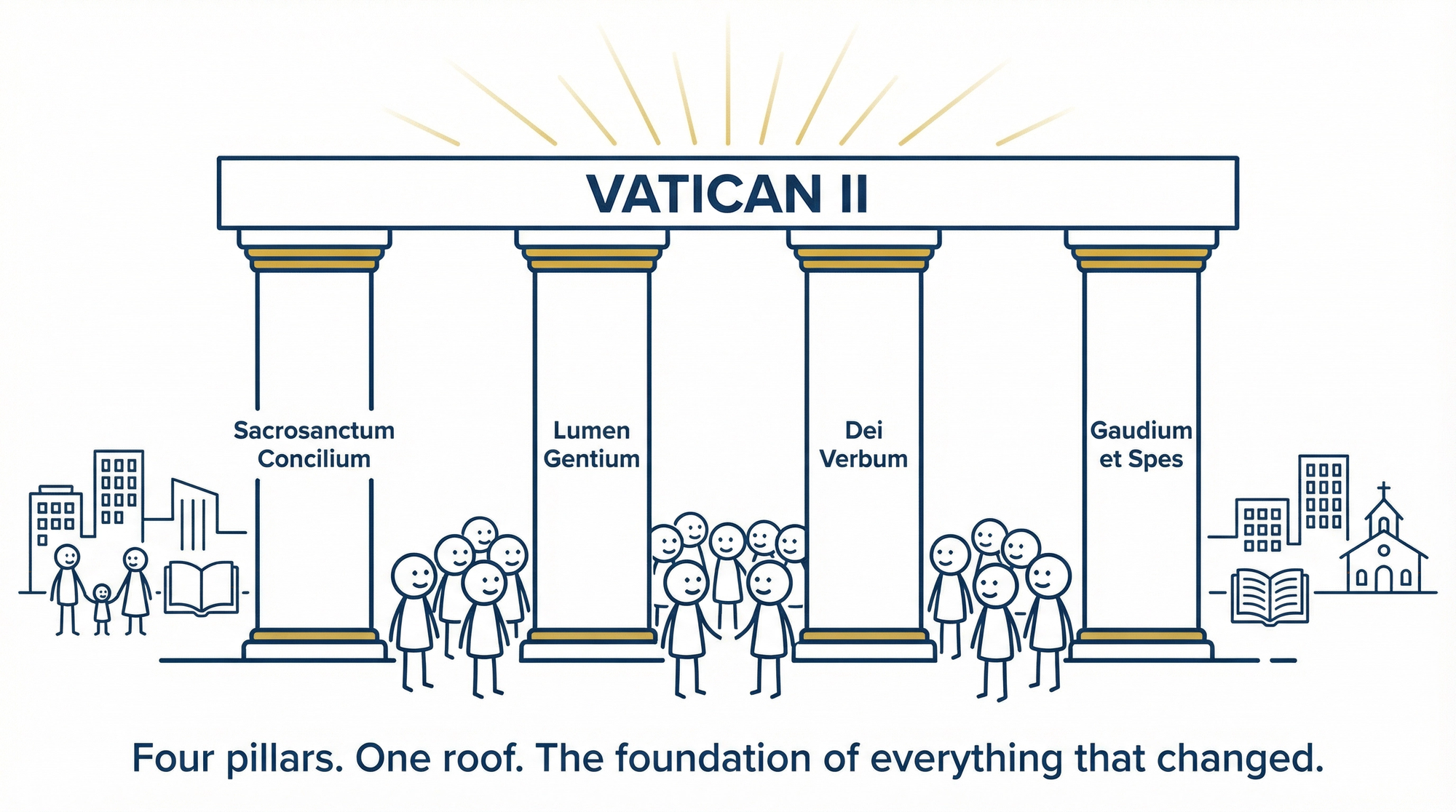
The Four Big Constitutions: The Foundation of Everything
These are the four documents that carry the most weight. Everything else orbits around them.
Sacrosanctum Concilium: The Mass Changes
The first document approved (by a vote of 2,147 to 4) and the most immediately visible to ordinary Catholics.
The core principle:
"Full and active participation by all the people is the aim to be considered before all else." (Sacrosanctum Concilium, 14)
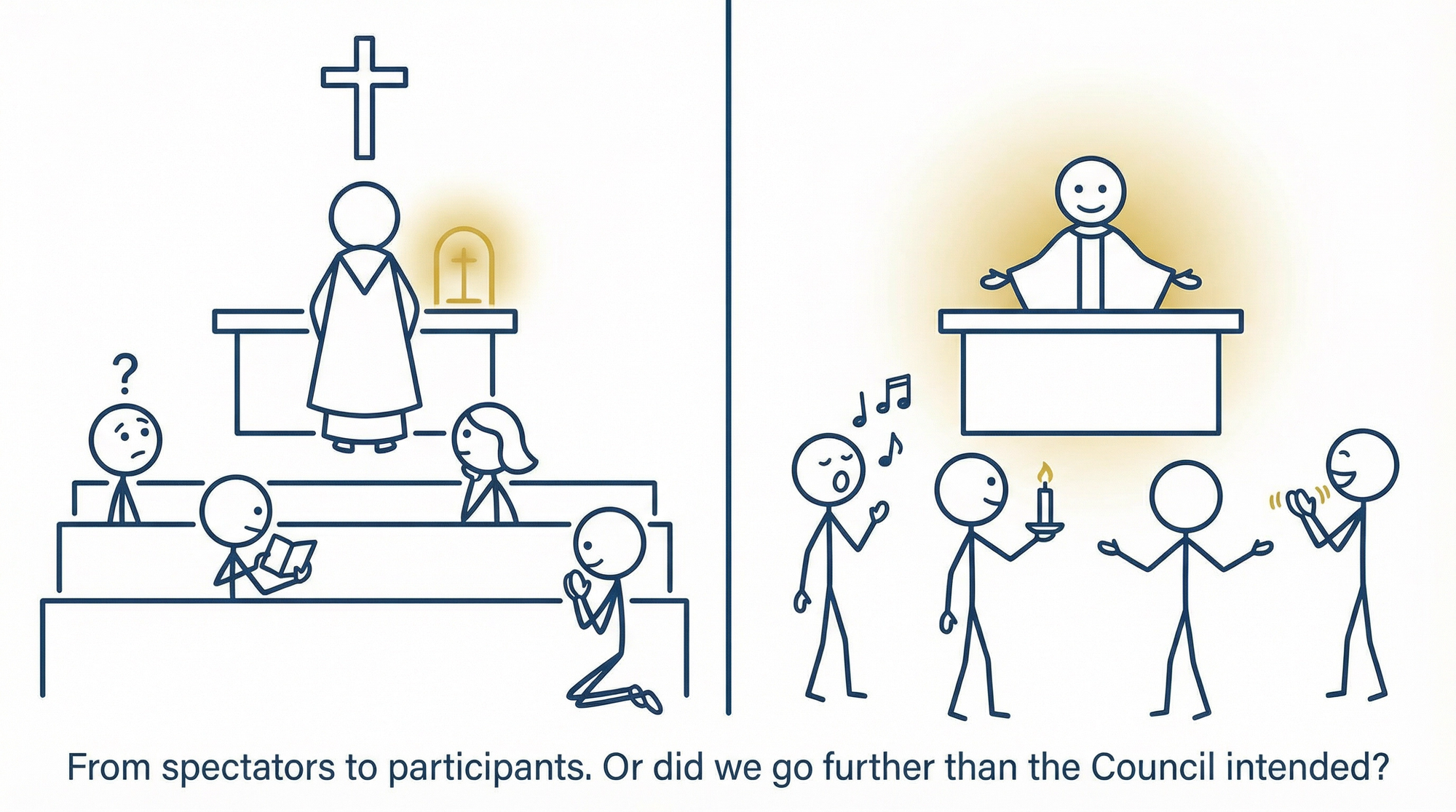
Before Vatican II, the Mass was entirely in Latin. The priest faced away from the people. The laity followed along in missals or prayed the Rosary during Mass. They were spectators, not participants.
Vatican II said this was wrong. The liturgy belongs to the whole People of God. Everyone should participate actively, consciously, and fully.
But here is what Sacrosanctum Concilium actually said about Latin: "The use of the Latin language is to be preserved." Vatican II did NOT abolish Latin. It permitted vernacular languages, "especially in the readings, directives and in some prayers and chants."
What happened in practice was something different. Within a decade, Latin nearly disappeared from most parishes. The priest turned to face the people. Music changed. Church architecture changed. Whether this matched the Council's intent is still debated.
Cardinal Josef Frings, one of the Council Fathers, said in 1969, "This is not what we council fathers decided." This tension between the text of Vatican II and its implementation is one of the most important things you need to understand about the Council.
Lumen Gentium: Who Is the Church?
Approved 2,151 to 5. This is the most important ecclesiological document of the 20th century.
The revolutionary move: instead of starting with the Pope and working down (hierarchy first), Lumen Gentium starts with mystery and works outward.
The Church is a sacrament:
"A sign and instrument both of a very closely knit union with God and of the unity of the whole human race." (Lumen Gentium, 1)
The Church is the "People of God." Not just the Pope, not just the bishops, not just the priests. Every baptized person IS the Church.
This changed everything about how we understand our place in the faith. Before Vatican II, the Church was understood as a hierarchy you belonged to. After Vatican II, the Church was understood as a body you are part of. The shared baptism of all Christians became the foundation, with the ordained hierarchy situated within the People of God as servants, not above them.
Charisms (spiritual gifts given by the Holy Spirit) are available to "all the faithful, of every rank," not just clergy. Your particular gifts, talents, and calling matter. They are not inferior to the gifts of priests and bishops.
What Lumen Gentium did NOT change: The Church still has a hierarchy. The Pope is still the supreme head. Bishops still lead dioceses. But these offices are described as "ministries of service, not of power." That distinction sounds subtle. For the lived experience of the Church, it was seismic.
Dei Verbum: Scripture and Tradition
Approved 2,344 to 6. This addressed the fundamental question: Where does God's revelation come from?
For centuries, there had been a debate. Are Scripture and Tradition two separate "sources" of revelation? Protestants say Scripture alone (sola scriptura). Some Catholics had treated Tradition as a separate, equally authoritative source.
Vatican II's answer resolved the tension: There is one source of divine revelation, transmitted through two channels.
"Sacred Tradition and Sacred Scripture form one sacred deposit of the word of God, committed to the Church." (Dei Verbum, 10)
Both flow from the same divine wellspring and tend toward the same end.
The Magisterium (the Church's teaching office) has the task of authentically interpreting the word of God. But the Council added a crucial qualifier:
"It is not above the word of God, but serves it." (Dei Verbum, 10)
Why does this matter? This gave Catholics a richer relationship with Scripture while maintaining the importance of Tradition. It also created a bridge for dialogue with Protestants who prioritize the Bible. The Church was saying: "We value Scripture. We take it seriously. We are not replacing it with human tradition."
Gaudium et Spes: The Church in the Modern World
The last and longest document. The first constitution in Church history addressed to the entire world, not just to Catholics.
The opening line says it all:
"The joys and the hopes, the griefs and the anxieties of the men of this age, especially those who are poor or in any way afflicted, these are the joys and hopes, the griefs and anxieties of the followers of Christ." (Gaudium et Spes, 1)
What does this represent? The Church is no longer hiding inside the fortress. It is walking out into the street and saying, "Your problems are our problems. Your hopes are our hopes. Let's talk."
Gaudium et Spes addresses marriage and family, culture, economics, politics, war and peace. It took "explicit responsibility for its role in the larger world" for the first time in Church history.
Before Vatican II, the modern world was the enemy. After Gaudium et Spes, the modern world was the mission field.
The Big Shifts Everyone Talks About
Beyond the four constitutions, Vatican II produced 12 more documents. Together, they created shifts in how the Church operates.
Religious Freedom: From Condemnation to Championship
The document Dignitatis Humanae was approved 2,308 to 70. It was the most contested vote of the Council.
Here is what makes this remarkable: Pre-Vatican II, the Church had condemned religious freedom. The Syllabus of Errors (1864) listed it as a condemned proposition, a heretical idea.
Vatican II reversed course completely:
"All people are to be immune from coercion... grounded in the very dignity of the human person." (Dignitatis Humanae, 2)
One scholar called it "undoubtedly one of the Council's most revolutionary texts."
This was not about saying all religions are equal. It was about saying all people deserve the freedom to seek truth without being forced. The Church was making a moral argument about human dignity.
This gave the Church moral standing to defend persecuted Christians in communist countries while also extending that defense to all people of faith everywhere.
Ecumenism: The End of the Cold War Between Christians
Pre-Vatican II, the Church's position was essentially this: other Christians are in error and should return to Rome.
Vatican II recognized the ecumenical movement as "a sign of the Holy Spirit's action."
Called ecumenism "one of the principal tasks" of the Council.
Acknowledged that genuine ecumenism involves "continual personal and institutional renewal" in the Church itself. The Church was willing to look at its own failures.
This opened decades of dialogue between Catholics, Protestants, and Orthodox Christians that continues today.
Non-Christian Religions: From Rejection to Respect
The document Nostra Aetate is the shortest but among the most significant.
"The Catholic Church rejects nothing of what is holy and true in these religions." (Nostra Aetate, 2)
It addressed Judaism directly:
"God does not take back the gifts He bestowed or the choice He made." (Nostra Aetate, 4)
It formally repudiated the idea of collective Jewish guilt for the death of Jesus. This overturned centuries of anti-Jewish teaching that had prepared the ground for persecution.
In the shadow of the Holocaust, this was not optional. It was moral necessity. The Church was saying: We were wrong. We name it. We will not repeat it.
The Laity: From Spectators to Participants
Multiple documents emphasized this:
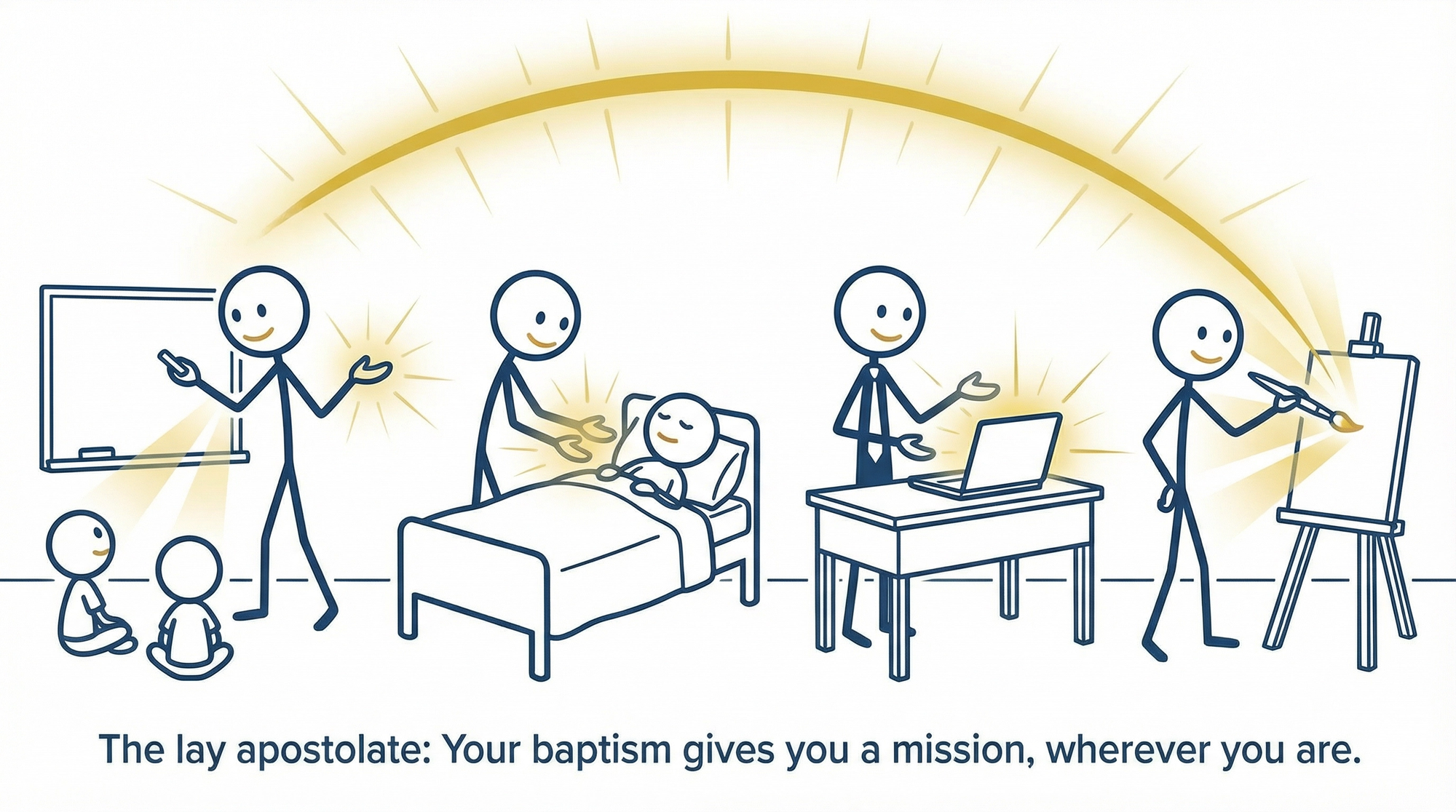
"The Church can never be without the lay apostolate." (Apostolicam Actuositatem, 1)
Laity share in Christ's mission through their baptism, not just through permission from clergy.
The Council urged lay people to "freely assume their responsibility" rather than "wait to receive orders from above."
Lay witness extends to the family, culture, economic matters, the arts and professions, the laws of the political community, international relations.
What seemed ordinary to later generations "appeared almost revolutionary in the more clericalist Catholic atmosphere of the mid-20th century."
You are not a passenger in the Church. You are a member of the Body of Christ. Your baptism gives you a mission.
What Vatican II Did NOT Change
Most confusion about Vatican II comes from people confusing what changed with what did not. This section is critical.
Doctrine Did Not Change
Vatican II was not a doctrinal council that defined new dogma.
The Real Presence of Christ in the Eucharist is still fully affirmed. Christ is present "especially under the eucharistic species."
The hierarchical structure of the Church is still in place. The Pope is still the head. Bishops still lead dioceses.
The teaching on marriage remains the same. Paul VI's encyclical Humanae Vitae (1968) reaffirmed the ban on artificial contraception after the Council. If Vatican II had reversed this teaching, Paul VI would not have needed to reaffirm it.
The Marian doctrines are still taught. Lumen Gentium devotes its entire final chapter to Mary. The Church did not minimize Marian devotion. It integrated it into a broader ecclesiology.
The necessity of the sacraments is unchanged. Holy Orders is still reserved to men. The moral teachings of the Church remain intact.
The Latin Mass Was Not Abolished
Sacrosanctum Concilium explicitly said Latin should be preserved. The Council did not mandate the elimination of Latin.
What happened in practice was often more radical than what the documents prescribed. This is one of the biggest sources of legitimate criticism from traditional Catholics.
They say: "We are not rejecting Vatican II. We are calling for the Council to be followed." This is not an unreasonable position.
The Key Distinction
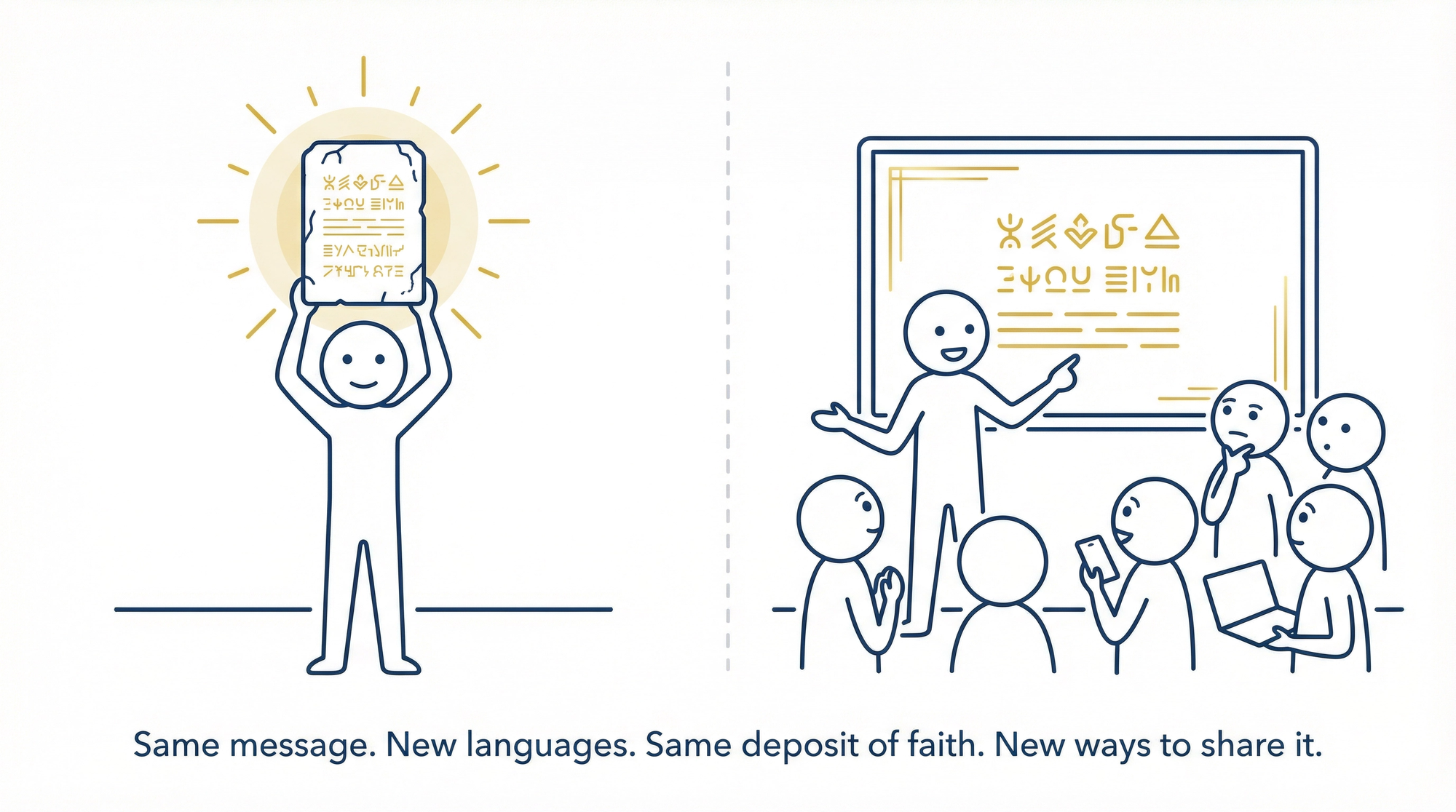
Vatican II changed how the Church expresses its faith, not what it believes.
It changed how the Church relates to the world, not its core doctrines.
It changed the Church's posture from defensive to engaged, not its substance.
Think of it this way: the message stayed the same, but the Church learned new languages to deliver it in.
The Fight Over Vatican II: Spirit vs. Letter
This is where things get complicated. This is also where you understand why reasonable Catholics disagree.
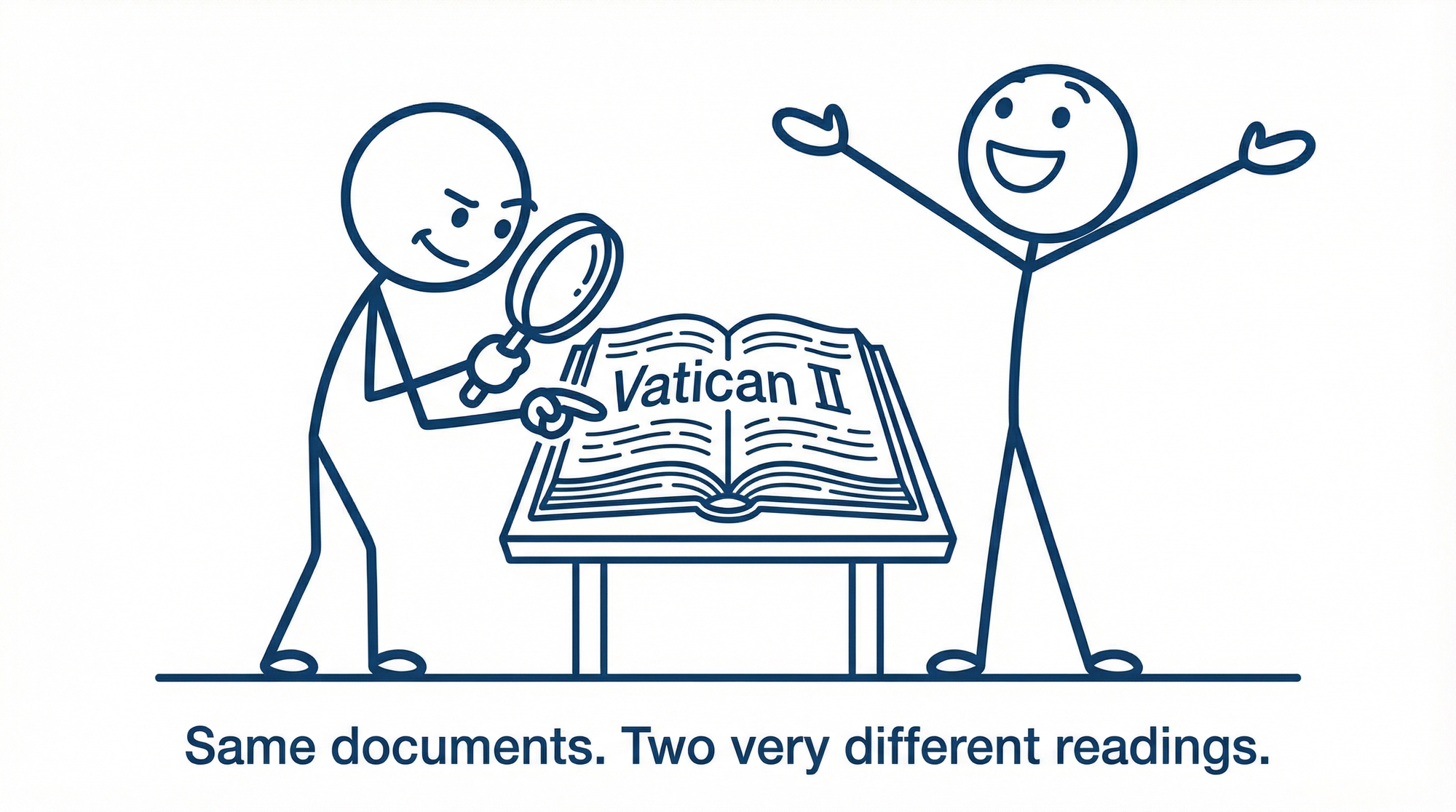
Two Ways to Read the Council
The "spirit of Vatican II" refers to teachings and actions attributed to the Council that go beyond what the actual documents say. A spirit of openness, dialogue, and modernization taken to its logical or illogical conclusion.
The "letter of Vatican II" is what the 16 documents actually say, read carefully and in context.
These are not always the same thing.
What Went Wrong According to Critics
In the decades after Vatican II, many changes were implemented in the name of its "spirit" that were never authorized by the actual documents.
Latin nearly disappeared. Traditional devotions were discouraged. Church architecture was stripped bare. Religious orders collapsed in membership. Parishes closed.
Cardinal Josef Frings, one of the Council Fathers, said in 1969: "This is not what we council fathers decided. This is against the decisions of the council."
Academic Michael Novak wrote: The spirit of Vatican II "sometimes soared far beyond the actual, hard-won documents and decisions."
These are not extreme traditionalists complaining. These are men who lived through the Council and participated in it.
Were they right? That is a fair question to ask.
The Current Landscape
Progressive Catholics want the Council's vision implemented more fully. They believe Vatican II opened a door that has not yet been walked through completely.
Traditional Catholics want the actual text of the documents to be followed, not the "spirit" added later by others.
Some radical traditionalists reject Vatican II altogether. They believe the Council was a mistake. The Church does not support this fringe position, but it exists.
Pope Benedict XVI proposed the "hermeneutic of continuity": reading Vatican II in continuity with the full tradition, not as a rupture with the past. This was an attempt to build a bridge between these groups.
The tension is real. Ongoing. And unlikely to be resolved in our lifetime. But the documents themselves are available for anyone to read. You can form your own judgment.
Why This Still Matters Today
Vatican II is the reason the Mass you attend is in English (or your native language).
It is the reason your parish has a lector, a cantor, extraordinary ministers, and parish councils.
It is the reason the Church has formal dialogues with Protestant, Orthodox, Jewish, Muslim, and Buddhist leaders.
It is the reason the Church speaks about human dignity and religious freedom on the world stage.
It is the reason laypeople are told their baptism gives them a mission, not just a membership card.
Every time you attend Sunday Mass as it is actually celebrated today, you are experiencing Vatican II. You do not have to agree with every implementation. But you are living in the world it created.
The Unfinished Work
Vatican II opened doors that the Church is still walking through.
The role of women in the Church continues to develop and be debated.
The relationship between local churches and Rome is still being negotiated. Should bishops have more authority? Should parishes? These questions remain.
The liturgy wars are far from over. The 2021 document Traditionis Custodes restricted the Traditional Latin Mass in many dioceses. This sparked new controversy. Some see it as a return to Vatican II's actual text. Others see it as betrayal of Vatican II's spirit of openness.
Ecumenism has made progress but full unity remains distant.
The Church's engagement with science, technology, and culture needs constant updating.
Whether you are Catholic, Protestant, Orthodox, or just curious, Vatican II matters. It was the moment the largest Christian body on earth decided to stop talking to itself and start talking to the world.
You can agree or disagree with how it has been implemented. But you cannot understand modern Christianity without understanding this Council.
The Church looked in the mirror in 1962 and asked, "Who are we? And how do we speak to a world that has changed?" The answers to those questions are still unfolding.
Frequently Asked Questions
What is Vatican II?
Vatican II (the Second Vatican Council, 1962-1965) was a meeting of over 2,500 bishops called by Pope John XXIII to update how the Church engages the modern world. It produced 16 documents that reshaped Catholic worship, ecclesiology, ecumenism, and the Church's relationship with other religions and secular society.
Did Vatican II change Catholic doctrine?
No. Vatican II did not define new dogma or reverse existing doctrine. It changed how the Church expresses and communicates its faith. Core teachings on the Eucharist, the hierarchy, Mary, the sacraments, and moral theology remained intact. The emphasis shifted from what the Church believes to how it relates to the world.
Why was the Mass changed after Vatican II?
Sacrosanctum Concilium called for "full and active participation" of the laity in the liturgy. This led to permission for Mass in vernacular languages, the priest facing the people, and greater lay involvement. The Council did not abolish Latin, but in practice, Latin nearly disappeared from most parishes within a decade.
What is the "spirit of Vatican II"?
The "spirit of Vatican II" refers to teachings and changes attributed to the Council that go beyond the literal text of its 16 documents. Critics argue this spirit has been used to justify changes the Council never authorized. Supporters argue it represents the Council's deeper intention of openness and renewal.
Do traditional Catholics reject Vatican II?
Most traditional Catholics do not reject Vatican II itself. They believe the Council's documents, read carefully, support far more continuity with tradition than subsequent implementations suggest. A small fringe rejects the Council entirely, but this is not the mainstream traditional position.