

What if everything you learned about baptism was incomplete?
You probably grew up hearing that baptism is "just a symbol" of faith you already have. A public declaration. A nice way to show the world you've decided to follow Jesus.
But what if that's not what the Bible actually says? What if the early Christians understood baptism as something far more powerful: the actual moment when God applies salvation to your soul?
This isn't a fringe Catholic idea. For fifteen hundred years, every Christian church taught that baptism literally saves you. The only "symbolic only" view didn't appear until the 1500s when Ulrich Zwingli introduced it in a radical departure from everyone who came before him. Even Martin Luther, the Protestant hero, maintained his whole life that baptism saves.
Let's explore what the Bible and early Christians actually believed about this moment of water and transformation.
What Most of Us Were Taught vs. What Scripture Actually Says
If you grew up evangelical, you probably learned this version: You accept Jesus in your heart through faith. That's what saves you. Then, some time later, you get baptized as an outward sign of the inward change that already happened.
This makes intuitive sense. Decision first, then symbol. Like saying "I do" at a wedding and then throwing a party to announce it.
But here's the problem. When you actually read the New Testament without the "symbolic only" lens, something different emerges. The Bible consistently presents baptism as the moment of salvation, not a symbol of something that happened before it.
This isn't to say faith isn't crucial. Of course it is. But faith and baptism work together, like two wings of a bird. Remove one, and the bird can't fly.
Let's look at what Jesus himself said.
Jesus Establishes Baptism as the Entry Point to God's Kingdom
In John 3, Jesus is having a conversation with Nicodemus, a respected Jewish teacher. Nicodemus is confused about what it means to be "born again." Jesus answers with remarkable clarity.
"Unless one is born of water and the Spirit, he cannot enter the kingdom of God." (John 3:5)
Think about that wording. Jesus doesn't say, "It's helpful if you're baptized." He doesn't say, "Baptism symbolizes the new birth." He says you cannot enter God's kingdom without being born of water and Spirit. Period.
The word "water" here would have been immediately clear to Nicodemus and every Jewish listener. In the Old Testament, water baptism was the cleansing ritual. When Naaman wanted healing from leprosy, he dipped in the Jordan River. When Israel needed to be holy before encountering God, they went through water. The symbol was already established. Jesus is picking up that symbol and making it something real and necessary.
Notice too the grammatical structure. Jesus uses a single preposition, "of," governing both "water" and "Spirit." This isn't water OR Spirit. It's a unified new birth process involving both. Every early church father interpreted this exactly the same way. Justin Martyr, writing around 150 AD, explained that converts "are regenerated in the same manner in which we were ourselves regenerated." How? Through baptismal washing in the name of God, Father, Son, and Holy Spirit.
Then there's Mark 16:16.
"He who believes and is baptized shall be saved, but he who does not believe will be condemned." (Mark 16:16)
This verse has bothered people who hold the "symbolic only" view for centuries. Notice the structure: "He who believes AND is baptized shall be saved." Both conditions are presented together. Then it contrasts: "He who does NOT believe shall be condemned." The grammar is telling us something: faith and baptism are both necessary for salvation.
If baptism were purely symbolic, we'd expect Jesus to say something like, "He who believes is saved, and baptism is a nice way to show it." But that's not what's written. Both belief and baptism are presented as requirements.
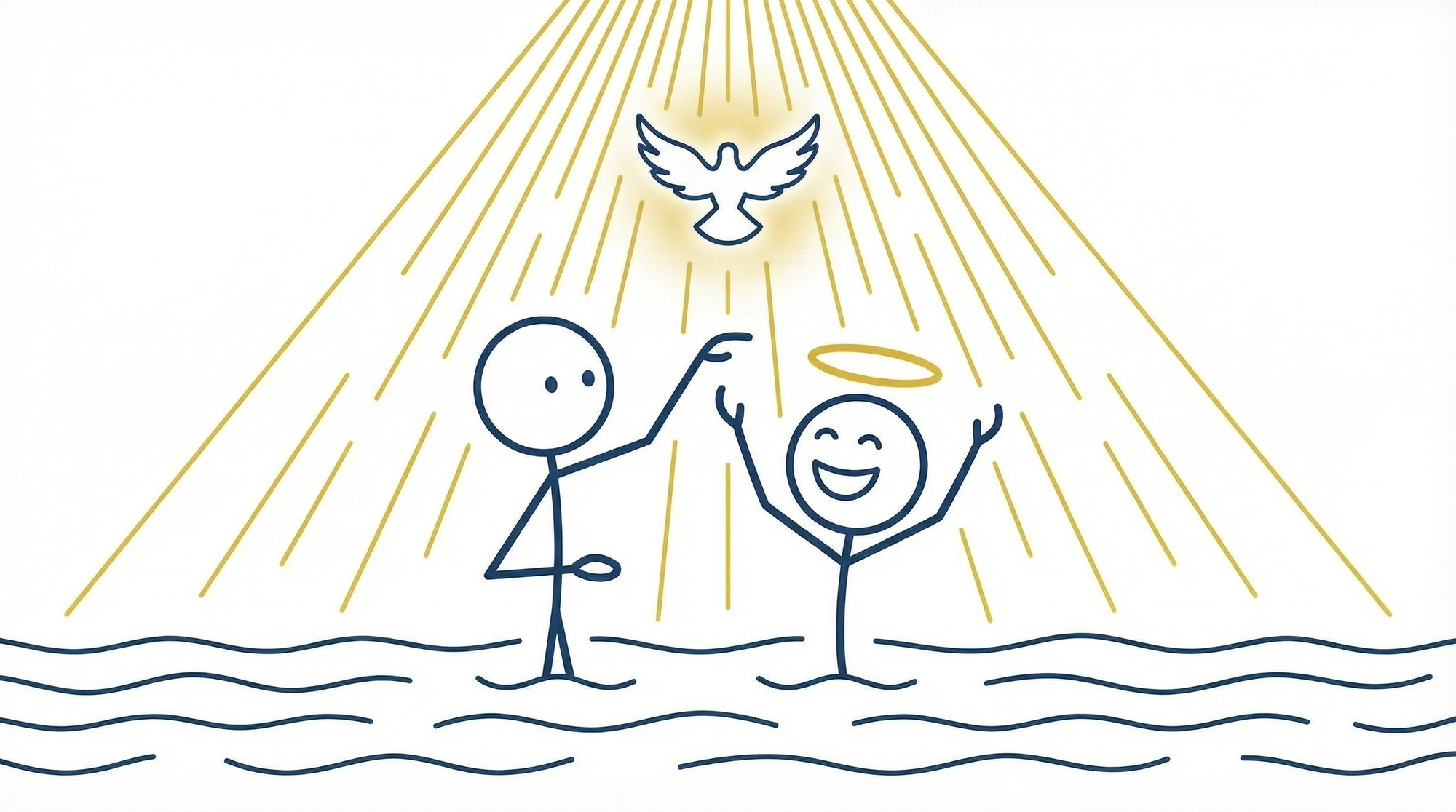
The Apostles Taught Baptism as the Moment Sins Are Forgiven
After Jesus ascended, the apostles had to explain how all this works in practice. Let's listen to what they actually said.
Peter's sermon on Pentecost is the first big moment. Three thousand people ask, "What do we do?" Here's his answer:
"Repent and be baptized every one of you in the name of Jesus Christ for the forgiveness of sins, and you will receive the gift of the Holy Spirit." (Acts 2:38)
Notice Peter doesn't say, "Repent and accept Jesus. Then, later, get baptized as a symbol of what's already happened." He links repentance and baptism as a connected pair, and places baptism as the moment when forgiveness occurs and the Holy Spirit is received.
The Greek word here is "eis," which means "for" or "unto." Some people argue this means "because of" rather than "for the purpose of," but that gets the grammar backwards. If sin was already forgiven before baptism, the verse would need to say baptism came after forgiveness. But Peter presents it as the moment when forgiveness happens.
Acts 2:41 confirms this reading: "Those who gladly received his word were baptized." The Holy Spirit came at Pentecost. Now these people hear the message and immediately get baptized. The baptism completes the conversion process; it's not just commemorating something that finished earlier.
Now look at Paul. In Romans 6, Paul writes something absolutely stunning:
"Do you not know that as many of us as were baptized into Christ Jesus were baptized into His death? Therefore we were buried with Him through baptism into death, that just as Christ was raised from the dead by the glory of the Father, even so we also should walk in newness of life." (Romans 6:3-4)
Paul says we are "baptized into Christ." Not "baptism symbolizes our union with Christ." Not "baptism represents our union." But actual entry, actual participation. We die with Christ. We're buried with Him. We rise with Him.
This is the heart of salvation itself. And Paul places it in baptism.
Later Paul writes:
"For as many of you as were baptized into Christ have put on Christ." (Galatians 3:27)
"Put on Christ." This is spiritual transformation language. Complete identification with Christ. And it happens in baptism.
Then First Peter, which might be the clearest verse of all:
"Baptism now saves you, not as a removal of dirt from the flesh, but as an appeal to God for a clear conscience through the resurrection of Jesus Christ." (1 Peter 3:21)
Peter literally says, "Baptism now saves you." He then clarifies that this isn't about physical cleanliness (like a bath cleans your body). It's about spiritual reality. An appeal to God that produces a clean conscience.
How do you read "baptism now saves you" as symbolic? The words don't allow that interpretation. Peter is saying this sacrament has actual salvific power.

The Entire Early Church Agreed on This
Here's where it gets really striking. If baptismal regeneration is a misreading of Scripture, you'd expect at least some early Christians to disagree. You'd expect to find alternative interpretations in the writings of the church fathers.
You don't find that.
Every significant church father from the first centuries teaches that baptism is necessary for salvation. This isn't a Catholic invention from the Middle Ages. This is universal apostolic tradition.
Justin Martyr, writing around 150 AD, explained the baptismal practice to critics: "They who have been convinced and believed that what we teach and say is true, and undertake to be able to live accordingly, are directed to pray and to entreat God in fasting, for the remission of their sins that are past, we praying and fasting with them. Then they are brought by us where there is water, and are regenerated in the same manner in which we were ourselves regenerated."
Notice his word: "regenerated." Not "symbolized." Regenerated. Born again. Actual spiritual rebirth.
Tertullian, a few decades later, was even more direct: "Without baptism, salvation is attainable by none." He saw baptism as essential, drawing directly from Jesus's words about the necessity of water.
Cyprian of Carthage gave personal testimony to this power: "When I was still lying in darkness and gloomy night... I used to regard it as a difficult matter that a man should be capable of being born again. But after the water of new birth helped me, and the stain of my former years was washed away, and a clear light from heaven was poured into my reconciled heart... a second birth had restored me to a new man."
Augustine, perhaps the greatest theologian of the ancient church, taught that "according to apostolic tradition, the churches of Christ hold it as an inherent principle that without baptism and participation at the table of the Lord it is impossible for any man to attain either to the kingdom of God or to salvation and life eternal."
John Chrysostom, the golden-voiced preacher, explained what happens in baptism: "They who approach the laver become clean from all fornication. The word has shown more, that they have become not only clean, but both holy and just, for it does not say only 'you were washed,' but also 'you were sanctified and justified.'"
These aren't fringe figures. These are the most respected theologians in Christian history, writing across centuries and continents. They had no theological bias pushing them toward baptismal regeneration. They taught it because that's what the apostles had taught them.
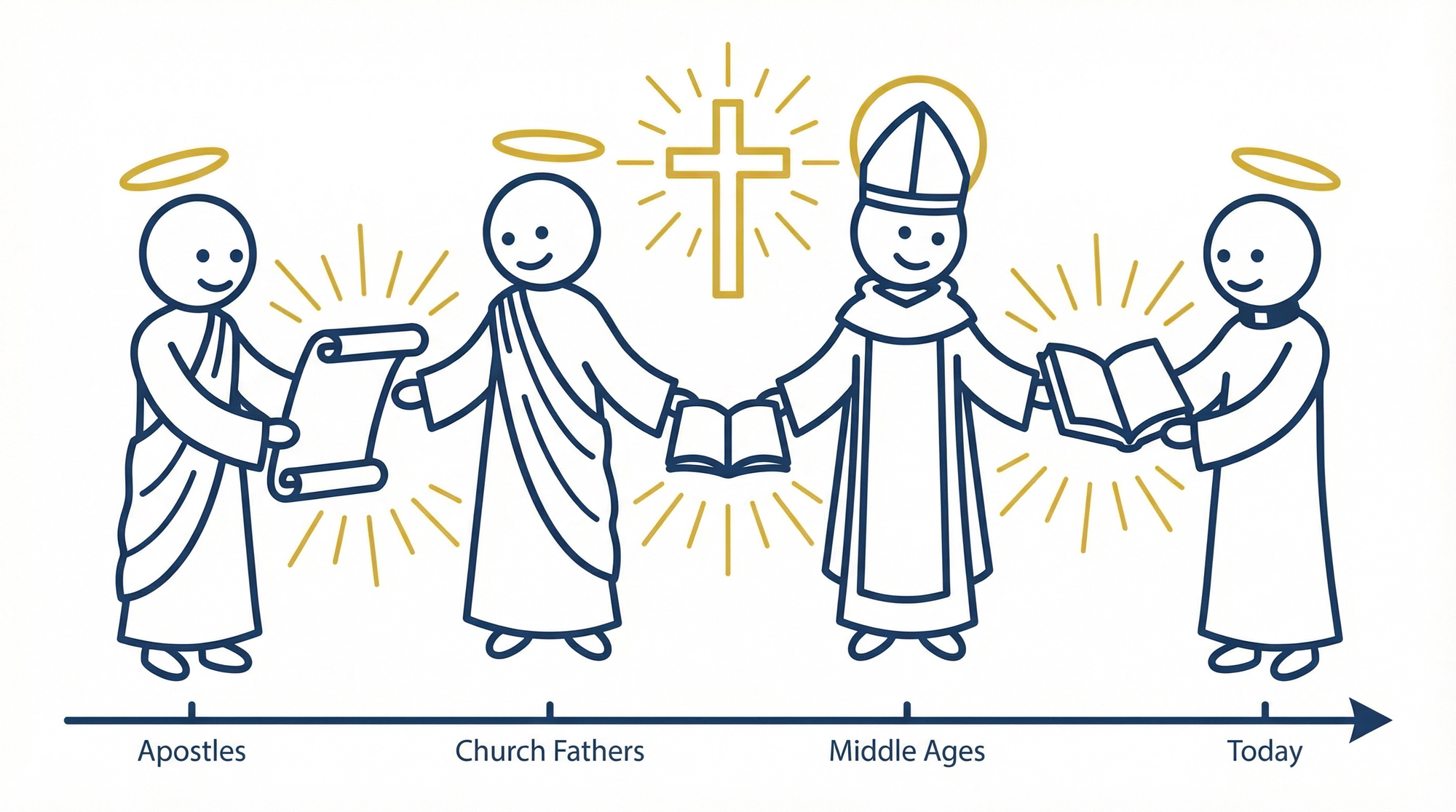
The Historic Record Shows This Was Christian Orthodoxy
If baptismal regeneration were a Catholic invention, the historic timeline would show it appearing gradually over centuries. But that's not what happened.
The Nicene Creed, formulated in 381 AD by hundreds of bishops from across the Christian world, deliberately included this confession: "We acknowledge one baptism for the forgiveness of sins."
Why did they put this in the Creed? The Nicene Creed was designed to preserve essential Christian doctrine. It includes the Trinity, the incarnation, the resurrection, and the Holy Spirit. Right alongside those fundamentals, the bishops included baptism for the forgiveness of sins.
Notice the exact wording: "for the forgiveness of sins." Not "symbolizing" or "representing." But "for," in the same sense that medicine is given "for" healing or food is eaten "for" nourishment.
This creates a major problem for the "symbolic only" view. If baptism were merely symbolic, wouldn't the Creed say "one baptism in the form of forgiveness" or "one baptism representing forgiveness"? The fact that virtually all Christian denominations today recite a Creed affirming baptism for the forgiveness of sins, while many deny baptism's necessity, creates a fundamental inconsistency in their own theology.
Now let's jump ahead to the Reformation. You might assume that baptismal regeneration was a medieval Catholic innovation that Luther and the other Reformers corrected. Not quite.
Martin Luther held his entire life that baptism saves. In his Large Catechism, he wrote: "The power, effect, benefit, fruit, and purpose of baptism is that it saves. To be saved is nothing else than to be delivered from sin, death, and the devil, and to enter into Christ's kingdom and to live with him forever."
The Augsburg Confession, the official Lutheran statement of faith from 1530, explicitly states: "Of Baptism they teach that it is necessary to salvation, and that through Baptism is offered the grace of God."
Even when facing his worst spiritual attacks, Luther would write "Baptizatus sum" on his table: "I am baptized!" He wasn't appealing to a symbolic memory. He was clinging to the objective reality of what God had done to him in baptism. Luther believed baptism created a real, ongoing transformation that demons couldn't erase.
The first major Protestant to break with this was Ulrich Zwingli in the 1520s. And Zwingli himself was honest about how radical this was. He acknowledged: "In this matter of baptism, I can only conclude that all the doctors have been in error from the time of the apostles. All the doctors have ascribed to the water a power which it does not have and the holy apostles did not teach."
Zwingli was explicitly contradicting not just Catholics, but literally everyone who came before him, including Luther. Reformed theology gradually moved further away from sacramental power, and revivalist movements of the 1700s and 1800s (like the Great Awakening) accelerated the shift toward emphasizing personal emotional experience over objective divine grace through established means.
But notice: the shift toward "symbolic only" is recent, happening only in certain Protestant denominations. The Eastern Orthodox, Roman Catholics, Anglicans, and Lutherans have all maintained the historic position that baptism genuinely saves. Most of Christianity, even today, teaches baptismal regeneration.
Common Objections Find Honest Answers
Let's address the strongest objections people raise, because they deserve real answers.
The "Faith Alone" Question
Critics say: "Baptism creates works salvation. It contradicts sola fide. We're saved by faith alone, not by rituals."
But here's the thing. Luther himself proved these two ideas are compatible. Baptism isn't a human work. You don't earn salvation by baptizing yourself. You receive baptism from the church as something God does through an appointed instrument.
Think of it this way. You didn't buy your salvation. God purchased it through Christ's death. But you receive the purchase through means God appointed. Baptism is one of those means. It's the Holy Spirit's tool, not your accomplishment.
Titus 3:5 captures this beautifully: Paul says we are saved "not because of works done by us in righteousness, but according to his own mercy" through "the washing of regeneration." Baptism is God's work done in your life. You participate by receiving it, but the saving power comes from God, not your effort.
Faith and baptism work together. Faith receives what baptism conveys. Baptism expresses what faith trusts in.
The Thief on the Cross Problem
Critics point out: "Jesus saved the thief on the cross without baptism. So baptism can't be necessary."
This argument has multiple problems.
First, we don't actually know the thief wasn't baptized. John the Baptist had been baptizing for years. Jesus and His disciples were baptizing too (John 3:22-23, 4:1-2). The thief could very well have been baptized earlier. Scripture simply doesn't tell us either way. Building doctrine on an assumption violates solid biblical interpretation.
Second, the thief died during the Old Covenant, before Christ's death established the New Covenant. New Testament baptism requires being "baptized into Christ's death." That was impossible before Christ actually died. The Great Commission commanding baptism came after the resurrection. The thief was living under a different covenant structure.
Most importantly, we don't use exceptional cases to override clear, repeated commands. Christ established baptism as the ordinary way of salvation for the New Covenant church. The thief represents an extraordinary exception because of extraordinary circumstances. Exceptional cases teach us about God's mercy, not about ordinary Christian practice.
The early fathers recognized this. Cyprian said the thief "was baptized in his own blood as a martyr." Augustine called it "baptism of substitution" when circumstances make the sacrament impossible but the person has faith. They never used the thief to argue baptism wasn't necessary in normal circumstances.
The "It's Only a Symbol" Reading
Some people insist baptism is purely symbolic. But how do you read "baptism now saves you" as symbolic? The language is direct.
Similarly, all the verses using "for the forgiveness of sins" use the same preposition (eis) that appears when Matthew describes Christ's blood shed "for the remission of sins." If Christ's blood genuinely accomplished forgiveness, then baptism for forgiveness operates the same way. Both accomplish what they signify.
Sacraments are sign and instrument together. Baptism is both a sign of faith and an instrument of grace. It points to the salvation accomplished by Christ while actually conveying that salvation to the one receiving it.
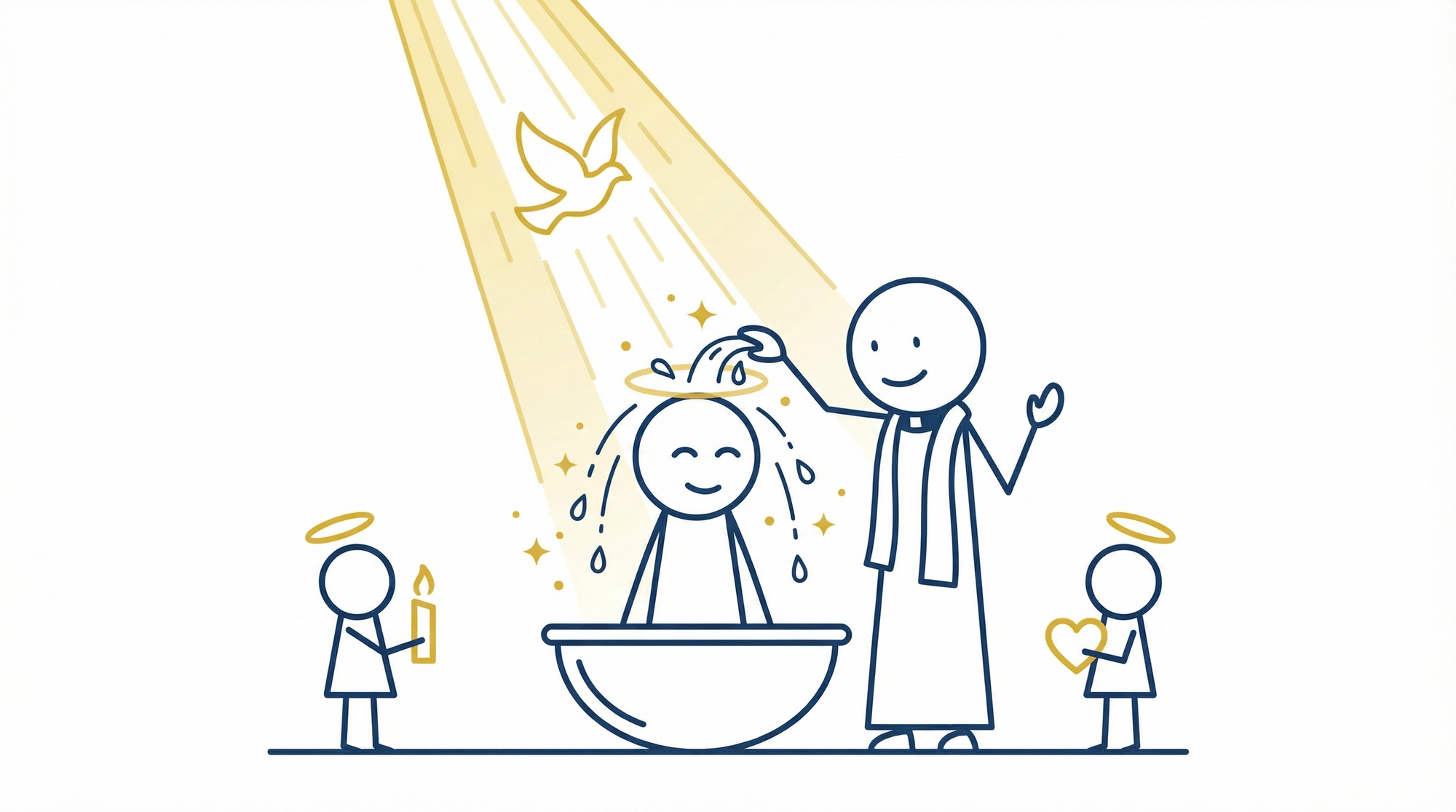
What About Babies? Aren't They Too Young to Have Faith?
Some object to infant baptism by saying babies can't believe, so baptism wouldn't help them.
But the Bible describes grace operating on infants repeatedly. Original sin affects humans from conception (Romans 5:12), so infants need cleansing regardless of age. Jesus welcomed children without requiring conscious faith first (Mark 10:14). John the Baptist was filled with the Holy Spirit while still in the womb (Luke 1:41). Why would children be too young to receive the Holy Spirit's work in baptism?
The early church universally baptized infants. Origen noted "the Church received from the apostles the tradition of giving baptism even to infants." Augustine explained that "the universal Church hastens to baptize infants." If baptism were merely symbolic, infant baptism would make no sense. But if it conveys real grace and cleansing, infants benefit profoundly.
One Remarkable Word: Regeneration
Let's zoom out and notice something remarkable. The New Testament uses a specific word for what baptism does: "regeneration."
Paul uses it in Titus 3:5. Greek: "palingenesia." New birth. Complete rebirth. Peter uses it implicitly when he says baptism "saves."
This isn't the language of symbolism. This is transformation language. This is the moment when a human being is reborn spiritually, joined to Christ, regenerated by the Holy Spirit.
Jesus didn't say, "Go baptize to symbolize rebirth." He said, "Go baptize for discipleship. Baptize in the name of the Trinity. Teach them everything."
The water is real. The words are real. God's action is real. What happens is real regeneration, not pretend symbolism.
The Weight of the Evidence
Let's step back and see the full picture.
Jesus Himself said you cannot enter God's kingdom without being born of water and Spirit (John 3:5). You cannot be saved without belief and baptism (Mark 16:16).
The apostles taught baptism is when sins are forgiven (Acts 2:38), when we are joined to Christ's death and resurrection (Romans 6:3-4), when we put on Christ (Galatians 3:27), when we actually receive salvation (1 Peter 3:21).
Every major church father for fifteen hundred years interpreted these passages the same way and taught baptismal regeneration consistently.
The Nicene Creed, accepted by almost all Christian traditions, confesses "one baptism for the forgiveness of sins."
Even the great Reformation champion of sola fide, Martin Luther, maintained baptismal regeneration his entire life.
The historic departure into "symbolic only" views came only with Zwingli in the 1520s and developed primarily through later Protestant movements.
Eastern Orthodox, Catholic, Lutheran, and traditional Anglican churches have maintained unbroken teaching on this.
How do you account for all this evidence and still hold that baptism is "just a symbol"? The burden of proof lies with those claiming to correct Scripture, early Christians, the Nicene fathers, Luther, and fifteen centuries of Christian tradition.
What This Means for Your Faith
If baptism is what Scripture and historic Christianity say it is, that changes how you think about your faith story.
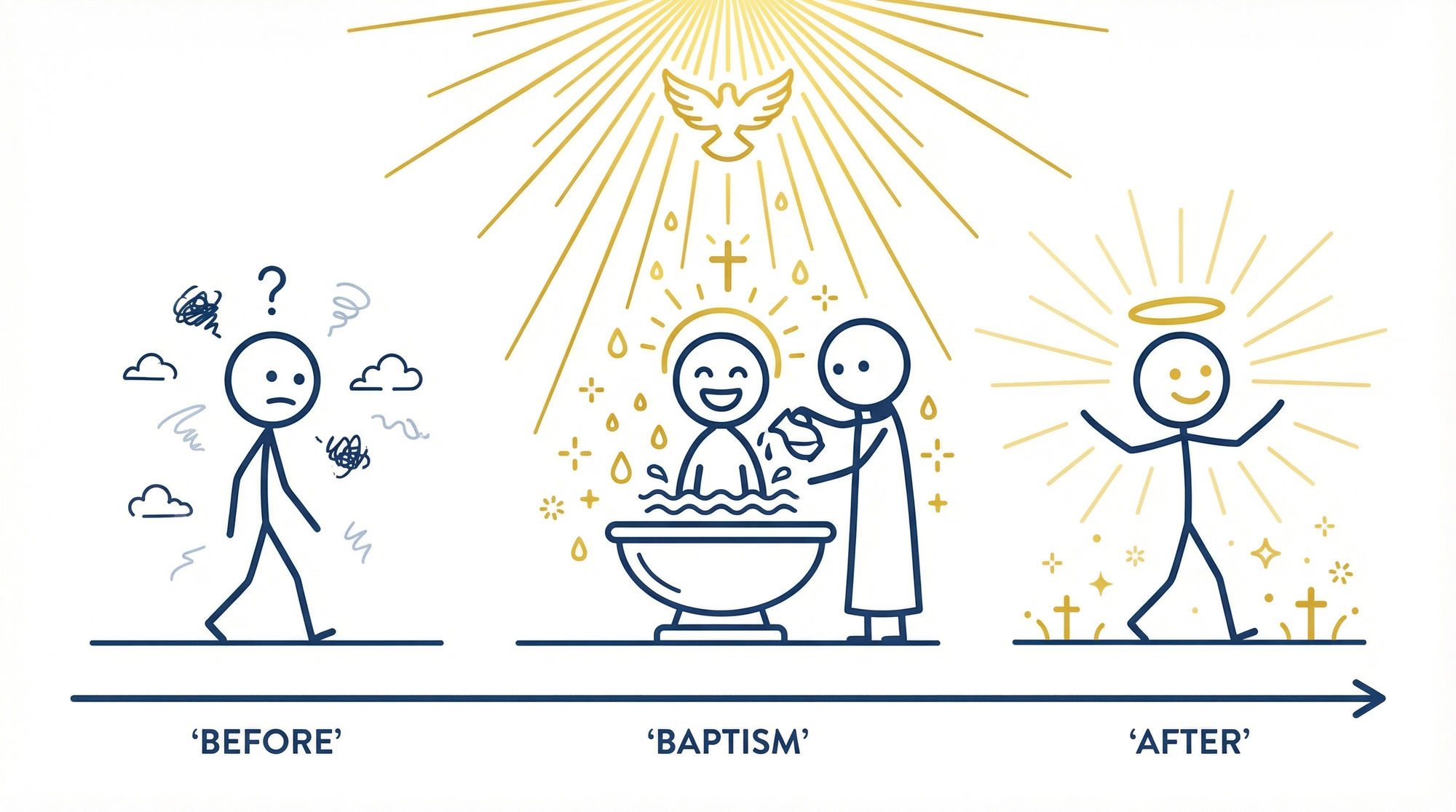
Your baptism wasn't a nice ceremony. It was the moment God applied salvation to you. The moment you were joined to Christ's death and resurrection. The moment you were cleansed of sin and filled with the Holy Spirit. The moment you were born again.
This gives you certainty. Certainty that depends not on your feelings or your memory, but on God's objective act. On water. On words. On the Holy Spirit's power.
When doubt comes (and it comes for everyone), you can remember: "I was baptized. That's real. That happened. God did that."
When you struggle with sin, you can remember that baptism plunged you into Christ's death. His death is the solution to sin. You died with Him already. Walk in that reality.
When you wonder if you're really God's child, you can remember the moment you were born of water and Spirit. That new birth is real. It's written on your soul.
Baptism connects you to something bigger than yourself. To two thousand years of Christian tradition. To billions of Christians across history who were baptized into the same Christ. To the apostles themselves. To Jesus's own teaching and command.
You're not alone in a private spiritual experience that only you know about. You're part of something ancient, global, real, and objective. Something written in water and the Spirit.